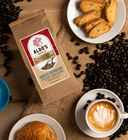
Easy and Healthy Gluten Free Biscotti Recipe
Quick answer
Gluten-free biscotti are the same twice-baked Italian cookie you already love — crisp, dunkable, and built to last — made with a gluten-free flour blend instead of wheat flour. The single most important step is to let the first-baked log cool completely before you slice it; that one habit prevents almost all crumbling. This recipe is naturally dairy-free (olive oil, no butter) and easy to make vegan. One honest note about our own cookies: Aldo's almond biscotti are made without gluten, but they're baked in a bakery that also handles wheat, so we don't call them "gluten-free," and they aren't suitable for anyone with celiac disease or a severe wheat allergy.
Biscotti are undoubtedly the most forgotten cookies in the American diaspora. Neither do they feature fanciful shapes, nor do they glam up in glitter. Alas, they are not even the first name when you prepare a list of all-time American favorite snacks.
However, they have continued to dominate the holiday season due to their transportability, long shelf life, and amazingly varied range of flavors. When you have this timeless cookie in your hand, you can switch between dipping, dunking, or dry snacking.
The Italians have remained committed to it as their go-to snack for decades. However, they failed to keep the secret of this sophisticated treat from the rest of the world for long.
Biscotti are extremely simple to make at home. Crispy and crunchy, the name 'biscotti' comes from the Latin word "biscoctus," which seems more like a spell from the Harry Potter movies than a snack item.
Now that you understand what biscotti is, let's navigate the ancient history of the cookie, cover the ingredients and method for our gluten-free biscotti recipe, and finish with tips, flour comparisons, and answers to the questions we hear most.
Can You Pass The History Of Biscotti Test?
Biscotti are baked twice to achieve that uber-dry and crunchy texture. They have a Latin lineage, with the name coming from the ancient term 'biscoctus' meaning twice-baked. They are the perfect partner for your piping hot cup of coffee and have developed a fine reputation worldwide for cookies.
The Italians use biscotti as an umbrella term to address many different cookie varieties. However, Americans have long been particular about calling this sweet, crisp, twice-baked Italian cookie, biscotti. Its history dates back to the early days of the Roman Empire. The first biscotti were prepared more for convenience than as a leisurely treat in Rome.
Travelers back then would count upon this cookie as a lasting source of nourishment on extended voyages. People in those days would initially bake the biscotti just to cook the ingredients. Then, they would repeat the process to dry them out completely, making the cookies more durable and less perishable on long journeys.
The decline of the Roman Empire put biscotti's popularity on hold. However, the Renaissance saw a re-emergence of its popularity in Tuscany, and popular folklore led biscotti to Rome. Tuscany today is proudly associated with the celebrated chewy snack.
The people of Tuscany would refer to biscotti as Cantucci di Prato. By then, they had successfully transformed into a treat, no longer a utility cracker. In nearby Prato, they would be flavored with almonds. You will always find Cantucci in every pasticceria in Tuscany.
It won't be inappropriate to claim that biscotti were born in Italy but reimagined in America. According to legend, it was Christopher Columbus who introduced biscotti to the American population — much like his fellow countrymen, he was looking for a food source that would last his extensive voyages.
By the time European settlers landed on the shores of America, these cookies had become a mainstay of the diet. The colonial period witnessed Americans embracing these hard, durable biscuits, in part because they were quick to bake and didn't call for a lot of exotic ingredients. Through the ages, bakers developed countless iterations — adding dried fruits and extract flavorings — and the broader American population welcomed biscotti much as it did most Italian foods.
Who Chooses Biscotti Made Without Gluten?
Gluten is a protein found in wheat, barley, rye, and their relatives. It's what gives traditional dough its stretch and chew. For most people it's completely harmless — but for some, avoiding it genuinely matters. Roughly a small but meaningful share of people react to gluten, and for them the right cookie isn't a luxury, it's the difference between joining the coffee break and sitting it out.
- Celiac disease — an autoimmune condition in which gluten damages the lining of the small intestine and, over time, interferes with nutrient absorption. The only treatment is a strict, lifelong gluten-free diet.
- Non-celiac gluten sensitivity — people who don't test positive for celiac disease but still experience symptoms such as bloating, discomfort, or fatigue after eating gluten.
- Wheat allergy — an immune reaction to wheat proteins specifically, which can range from mild to serious.
- Gluten ataxia — a rarer autoimmune response to gluten that affects coordination and muscle control.
An honest word on "healthier": if you don't have one of these conditions, choosing gluten-free isn't automatically better for you — a biscotto is still a cookie. The best reason to bake this version is the simplest one: so everyone at the table can dip one in their coffee.
About Aldo's biscotti. We bake our almond biscotti without gluten — no wheat flour goes into them. But our Greenport bakery also bakes with wheat, which means cross-contact is possible. That's why we describe them honestly as made without gluten rather than gluten-free, and why we don't recommend them for anyone with celiac disease or a severe wheat allergy. If you're simply cutting back on gluten by choice, they're a delicious option.
Your Guide to Making the Perfect Gluten-Free Biscotti
Gluten-free biscotti are the perfect foil for your coffee — crispy, crunchy, and made for dipping and dunking. The gluten-free bakery market has expanded rapidly in recent years, driven by growing awareness of celiac disease, gluten sensitivity, and a general move toward mindful eating. These days, baking without gluten no longer means giving up on taste or texture.
In this recipe we make biscotti that feel and taste like the real thing, with one meaningful change: we replace traditional wheat flour with a gluten-free blend, and we lean on technique to get the classic dry snap.
Ingredients for Gluten-Free Biscotti
- 2 cups (280 g) gluten-free all-purpose flour blend, with xanthan gum (if your blend has none, add 1 teaspoon)
- 1 teaspoon baking powder
- ¼ teaspoon salt
- ¾ cup (150 g) granulated sugar
- ¼ cup (50 g) packed light brown sugar
- ⅓ cup (80 ml) light olive oil
- 3 large eggs, at room temperature
- 1 teaspoon vanilla extract (or vanilla bean paste)
- 1 teaspoon almond extract
- ¾ cup (100 g) whole almonds, lightly toasted
For a cranberry-pistachio version, swap the almonds for ½ cup (60 g) shelled pistachios and ½ cup (60 g) dried cranberries.
This recipe uses a gluten-free all-purpose blend rather than a single nut flour. If you like to experiment, see the flour comparison below for how almond, buckwheat, coconut, and other gluten-free flours behave in biscotti.
Easy and Healthy Gluten-Free Biscotti Recipe
Inspired by the traditional twice-baked biscotti we bake at Aldo's, this home recipe is designed for everyday kitchens using ingredients you can easily find. After decades of baking biscotti in our bakery, we've learned that technique matters just as much as ingredients.
Gluten-Free Italian Biscotti
Prep: 20 minutes | Chill: 15 minutes | Bake: 1 hour (two bakes) | Cool: ~30 minutes | Total: about 2 hours 5 minutes | Makes: about 20 biscotti | Dairy-free
Equipment:
- Large mixing bowl
- Whisk or hand mixer
- Baking sheet lined with parchment paper
- Serrated bread knife
- Wire cooling rack
Instructions:
- Heat the oven to 350°F (180°C) and line a baking sheet with parchment paper.
- In a large bowl, whisk the eggs with the granulated and brown sugar until smooth. Whisk in the olive oil, vanilla, and almond extract.
- Add the gluten-free flour blend, baking powder, and salt. Mix to a soft dough, then fold in the almonds. The dough will be soft and a little sticky — that is normal for dough made without gluten.
- Chill the dough for about 15 minutes so the flour can hydrate and the dough becomes easier to shape.
- On a lightly floured surface, shape the dough into one log about 14 × 3½ × ¾ inches (or two smaller logs). Transfer to the lined sheet on the diagonal and brush away excess flour.
- First bake: 30 minutes at 350°F (180°C), until golden with a few cracks on top. Cracks are normal.
- Cool the log completely. The single biggest mistake people make is slicing too soon. Let the center cool completely to room temperature before cutting — about 30 minutes. This one step does more to prevent crumbling than almost anything else in the recipe.
- Slice the cooled log on the diagonal into ¾-inch pieces using a serrated bread knife and a gentle sawing motion — let the knife do the work rather than pressing down.
- Second bake: arrange the slices cut-side down and bake 30 minutes at 300°F (150°C), flipping halfway, until dry and crisp. For extra-crisp biscotti, extend to about 40 minutes.
- Cool the biscotti on a wire rack — not the hot sheet — so they finish drying and crisp up instead of steaming underneath.
Recipe notes:
- Cool before you slice. This single step prevents most crumbling. A warm log tears; a cooled log cuts clean.
- Dough made without gluten should feel softer than traditional wheat dough. Resist the urge to keep adding flour.
- Texture control: keep the second bake to 30 minutes for a slightly chewier center, or go to 40 minutes for a drier, crunchier cookie.
- Dairy-free: this version uses olive oil and no butter.
- Vegan option: replace the 3 eggs with 3 tablespoons ground chia stirred into 7–8 tablespoons lukewarm water; let it gel before using.
- Storage: airtight at room temperature up to 4 weeks, or frozen up to 6 months (see below).
Troubleshooting:
- Crumbles when slicing: the log was still warm, or cut with the wrong knife. Cool it fully and use a serrated bread knife.
- Soft after the second bake: it needs more drying time — return the slices to a 300°F oven until crisp.
- Dough too sticky to shape: chill a few minutes longer and lightly flour your hands and surface.
Why this method works: chilling hydrates the gluten-free flour blend so the dough handles cleanly; cooling the log fully lets the crumb set so it slices instead of shattering; the serrated, sawing cut keeps the centers intact; and the low, slow second bake drives off moisture for that classic dry snap.
Love biscotti with coffee? Download our free Coffee & Biscotti Pairing Guide to learn which coffees pair best with different biscotti flavors, using the same recommendations we use at Aldo's. Get the Free Pairing Guide →
Prefer to skip the baking? We make ours by hand in Greenport using the same twice-baked method — try our almond biscotti made without gluten.
Choosing Your Flour: A Gluten-Free Biscotti Comparison
This recipe uses a gluten-free all-purpose blend because a good blend already balances starch and binder to give structure close to wheat. If you'd rather build your own mix, here's how the flours people reach for most often behave in biscotti:
| Flour | How it behaves in biscotti |
|---|---|
| Gluten-free all-purpose blend | The reliable base for this recipe. Already balanced with starches and usually xanthan gum, so it gives structure closest to wheat. |
| Almond flour | Popular and naturally nutty; bakes dense and tender. Not a one-to-one swap — it has no starch or binder, so it needs extra egg and a recipe built around it. |
| Amaranth flour | Earthy and nutty. A pseudocereal that works best blended with lighter flours rather than used alone. |
| Buckwheat flour | Deep, earthy flavor. Can be crumbly on its own, so blend it with milder flours. |
| Arrowroot flour | A starch rather than a main flour. A spoonful helps bind and crisp when mixed with heavier flours like almond. |
| Coconut flour | Very absorbent; needs extra liquid and eggs. Use only in recipes written specifically for it. |
| Cassava flour | The closest single flour to wheat in texture — mild and neutral, made from dried, ground cassava root. |
Baking with almond flour? Treat it as its own recipe, not a substitute. Because almond flour lacks the starch and binder of an all-purpose blend, swapping it cup-for-cup into this recipe will bake up soft and crumbly. If you love that nutty character, start from a recipe designed around almond flour and its extra eggs.
How to Store Gluten-Free Biscotti
Biscotti made without gluten can be kept in a standard airtight container at room temperature for two to four weeks. Their long shelf life makes them ideal for keeping a few tucked away in the cupboard — so you'll never again face a coffee without a tasty accompaniment.
- To store: Keep biscotti at room temperature in an airtight container for up to four weeks.
- To freeze: Store biscotti in a zip-lock bag in the freezer for up to six months.
Making a batch to give as a gift? Browse a few biscotti gift ideas, or send one of our coffee and biscotti gift baskets.
Tips for Making Delicious, Crispy Gluten-Free Biscotti Every Time
Using the traditional twice-baked method, you can make this biscotti recipe with a handful of ingredients in one bowl. Once you get the hang of the general concept, every batch will be lip-smacking.
Check Your Oven Temperature Before Baking
Bake the biscotti dough as a single loaf (or two mini loaves) at 350°F. Look for a golden-brown color, which tells you it's ready for slicing. The loaf won't be fully done at this point, but it will be in the right state to slice.
During the second bake, dial the heat down to 300°F and bake both sides until lightly golden. Keeping the oven too high on the second bake will color the outside but leave the center fragile.
Adjust the Baking Time for Crispier Cookies
Many people prefer their biscotti crispy but not burned, so each bite holds up to dunking. For a crispier batch, extend the second bake toward 40 minutes at 300°F, flipping halfway, until both cut sides are golden and dry. If you prefer a softer center, keep the second bake closer to 30 minutes.
Saw the Once-Baked Loaf Carefully
Don't expect the loaf to be firm straight out of the first bake. Slicing it with a sharp, non-serrated knife will crush the center. If you don't achieve a clean cut on both sides, the biscotti won't crisp evenly in the oven.
Use a large serrated bread knife for the job — even a tomato knife suits the purpose better than a chef's knife.
Slice on the Bias
Slicing the loaf at an angle (on the bias) gives you the largest flat surface on each side of every piece. For the easiest slicing, shape your original log with the short ends angled sharply in the same direction.
Substitutions and Variations
This recipe is made without gluten and is naturally dairy-free — we use olive oil instead of butter, with no milk or cream. (Traditional Tuscan cantucci often use no added fat at all; a little olive oil simply keeps the crumb tender without making it greasy.)
Can You Make This Into Vegan Biscotti?
Yes. To turn this recipe into a vegan snack, replace the eggs with chia eggs. For the three eggs here, stir 3 tablespoons of ground chia seeds into 7–8 tablespoons of lukewarm water, let it sit until it gels, then use in place of the eggs.
Can You Replace the Almonds With Other Mix-Ins?
You can swap the almonds for other relatively dry mix-ins, like miniature chocolate chips or toasted chopped hazelnuts, which help absorb moisture in the loaf.
Avoid wetter mix-ins such as small pieces of dried fruit — they won't absorb moisture the same way. If you do add them, bake for a few extra minutes at each stage to compensate.
What Makes Biscotti Without Gluten Different From Traditional Biscotti?
The clearest difference is flavor, with subtler differences in texture and appearance. None of them make a made-without-gluten biscotto worse — just a little different in character.
- Flavor: Wheat flour is fairly neutral. Gluten-free flours each bring their own note — almond is nutty, rice is mild, buckwheat and amaranth lean earthy. Expect a slightly different, often nuttier character rather than a downgrade.
- Texture: Gluten is what makes traditional biscotti so uniformly firm and chewy. A good blend with xanthan gum gets you very close, though the crumb can be a touch more delicate — which is exactly why cooling the log fully before slicing matters so much here.
- Appearance: Made-without-gluten logs may spread and rise a little less, and can brown slightly differently. A quick brush of beaten egg before baking evens out the color and gives that classic golden finish.
Reading Labels: "Made Without Gluten" vs "Gluten-Free"
If you're buying biscotti rather than baking them, the exact wording on the label matters. In the United States, the FDA only allows a product to be called gluten-free if it contains fewer than 20 parts per million of gluten — a threshold designed to account for trace cross-contact, not just the recipe. When you scan an ingredient list, watch for wheat, barley, rye, malt, and triticale, and remember that gluten can hide inside binders and thickeners.
Why we say "made without gluten." Our biscotti contain no wheat flour — but because we share equipment and space with wheat baking in our Greenport bakery, we can't promise the under-20-ppm standard that the words gluten-free legally imply. We'd rather tell you the truth than print a claim we can't stand behind. That's also why we don't recommend them for anyone with celiac disease or a severe wheat allergy.
To Dunk or Not to Dunk
Now that you know all about Italian biscotti cookies, it's time to tackle the pressing question: to dunk or not to dunk? We dunk. The real debate is which liquid you dunk into — the dry, crunchy texture of biscotti is practically built for it.
1. The Coffee Dunk
Most people dunk their biscotti into a cappuccino or Americano to soak up the warm, caffeinated goodness. The crunchy hardness of the cookie is perfect for absorbing the heat of your coffee.
2. The Vino Dunk
Purists recommend wine as biscotti's perfect partner. The good people of Tuscany dip theirs into rich red wines, and many biscotti lovers agree that pairing the cookie with a sweet Italian wine is a hearty Italian tradition.
3. The Milk Dunk
Finally, some people enjoy dipping cookies into milk, warm or cold. Biscotti purists may frown, but if the dunk fits, go for it — milk and cookies have gone hand in hand for eternity.
The Many Flavors of Biscotti
A cookie originally built for travel, with minimal attention to flavor, has evolved into something far more varied. We encourage you to find your match and then explore the others — because why not? Here are a few popular flavors of these crusty beauties:
- Almond
- Cappuccino
- Cranberry
- Chocolate Chip
- Pistachio
Creative Ideas for Serving Biscotti
Whether you're enjoying a lazy afternoon at a café, decorating the snack table at a holiday gathering, or finishing a meal on a sweet note, these are some of our favorite ways to enjoy biscotti.
Paired With Ice Cream
Crumble biscotti into bits and sprinkle them over a bowl of ice cream, gelato, or frozen yogurt for a treat that's hard to resist.
Mix Up the Parfait
Swap the granola in your parfait for biscotti to elevate breakfast.
Add Something New to the Fruit Platter
Raise the sophistication of a fruit platter by scattering biscotti chunks across it.
Take S'mores to the Next Level
Swap the graham crackers for biscotti and give your s'mores a richer, crunchier upgrade.
Gluten-Free Biscotti FAQ
Are biscotti gluten free?
Traditional biscotti are made with wheat flour and are not gluten free. This recipe replaces the wheat flour with a gluten-free flour blend, so you can enjoy the same twice-baked cookie without gluten.
What is gluten-free cantucci?
Cantucci are the classic almond biscotti of Tuscany, traditionally made with wheat flour. A gluten-free cantucci simply swaps that wheat flour for a gluten-free blend, keeping the almonds and the signature twice-baked crunch.
Who should avoid gluten?
Avoiding gluten matters most for people with celiac disease, non-celiac gluten sensitivity, a wheat allergy, or gluten ataxia. For everyone else, choosing gluten-free is a matter of preference rather than a guaranteed health upgrade.
Is gluten-free biscotti healthier than regular biscotti?
For people with a gluten-related condition, choosing biscotti made without gluten prevents real symptoms. For everyone else it is not automatically healthier — a biscotto is still a cookie. The best reason to bake this version is so everyone at the table can share one.
Are Aldo's biscotti safe for people with celiac disease?
No. Our almond biscotti are made without gluten, but they are baked in a bakery that also handles wheat, so we cannot rule out cross-contact. We describe them as made without gluten rather than gluten-free, and they are not suitable for anyone with celiac disease or a severe wheat allergy.
Which flour is best for biscotti without gluten?
A gluten-free all-purpose blend with xanthan gum gives the most reliable structure and is what this recipe uses. Single flours like almond add flavor and character but usually need a recipe built around them rather than a one-to-one swap.
Can I use almond flour instead of a gluten free flour blend?
Not as a one-to-one swap. This recipe relies on a gluten-free all-purpose blend with xanthan gum for structure. Almond flour has no starch or binder and will bake up softer and more crumbly, so it cannot simply replace the blend cup for cup.
Why did my gluten free biscotti crumble?
The most common cause is slicing the log before it has cooled. A warm log is still soft in the center and falls apart under the knife. Cool the first-baked log to room temperature, then slice with a serrated bread knife using a gentle sawing motion.
Why must the center cool completely before slicing?
During the first bake the center stays soft and moist. Slicing it warm tears the slices instead of cutting them cleanly. Cooling the log to room temperature lets the structure set so each slice holds together for the second bake.
How do I make gluten free biscotti crispier?
Extend the second bake to about 40 minutes at 300°F (150°C), flipping halfway, until both cut sides are dry and golden. For a softer center, keep to the standard 30 minutes.
Is this recipe dairy free?
Yes. This home version uses olive oil instead of butter and contains no milk or cream, so it is naturally dairy free.
How do I store gluten free biscotti, and how long do they last?
Store them in an airtight container at room temperature for up to four weeks. If they soften from humidity, five minutes in a 300°F oven restores the crunch.
Can I freeze gluten free biscotti?
Yes. Freeze them in a zip-lock bag for up to six months, then bring to room temperature before serving.
Bake a Batch — or Leave the Two Bakes to Us in Greenport
However you get there, biscotti were made for coffee. If you bake a batch at home, we'd love to hear how it turns out. And if you'd rather skip the two bakes, we make our almond biscotti by hand in Greenport using the same twice-baked method — made without gluten, and a great choice if you're cutting back on gluten by preference. (As noted above, they're baked in a shared bakery, so they aren't suitable for celiac disease or a severe wheat allergy.) Pair a batch with a bag of our fresh-roasted coffee and your afternoon is sorted.