Is a Coffee Subscription Actually Worth It? (Honestly — Not for Everyone)
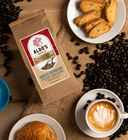
Stand at our counter on Front Street in Greenport for one morning and you'll hear it. The roaster's running in back, the biscotti case is still warm, somebody's waiting on a cappuccino — and at least once a week, usually with a little squint like they're bracing for a pitch, someone asks me: "So... is the subscription actually worth it? Or is that just a thing coffee companies do now?"
Fair squint. Everything is a subscription now. Your razors, your socks, your streaming services you forgot you have. Subscription fatigue is real — nearly half of consumers say they feel overwhelmed by how many they're juggling. Nobody needs another one on the pile.
So here's my honest answer on whether a coffee subscription is worth it — the same one I give across the counter: for some people, it's genuinely one of the smartest ways to buy coffee. For others, it's the wrong move, and I'd rather tell you that up front than have you find out three bags in.
This article is the long version of that answer. What a subscription actually solves, what it doesn't, when the math works, when it doesn't — and why the whole question, underneath everything, comes down to one number printed on the bag.
We've been roasting in small batches in Greenport since 1987. This is how I'd walk you through it if you were standing at the bar.

Is a Coffee Subscription Worth It? The Short Answer
A coffee subscription is worth it if you drink coffee most days and you care how it tastes. It removes the two ways home coffee quietly goes wrong — buying beans that were roasted months ago, and running out of the good stuff mid-week — by delivering freshly roasted coffee on a schedule that matches how fast you actually drink it.
It's not worth it if you drink coffee occasionally, if you genuinely enjoy browsing and switching brands every bag, or if you're the type to forget a subscription exists until the fourth box shows up.
That's the whole verdict. The rest of this article is the why — and the why is more interesting than you'd think, because it's mostly chemistry, not marketing.
Coffee Is a Perishable Product. Almost Nobody Shops Like It Is.
Here's the thing that reframes the entire question: coffee is fresh food. It has a peak window, like bread or produce. We just don't shop for it that way, because the bag doesn't look perishable and the shelf doesn't treat it that way.
Roasting transforms the bean — caramelization, Maillard reactions, the works — and builds the aromatic compounds you actually taste in the cup. From the moment beans leave the roaster, two clocks start running. The bean begins releasing trapped CO₂ (roasters call this degassing), and its aromatic compounds start oxidizing and drifting off into the air.
That decline isn't subtle. Coffee can lose a large share of its aromatic compounds — by some measurements up to 70% — within the first few weeks after roasting. The flavor doesn't go "bad" in a safety sense. It just goes quiet. Flat. Papery. Generic. You've tasted this coffee. Everyone has.
Whole-bean coffee generally sits in its peak window from about day 3 to day 21 after roasting — we wrote a full breakdown in How Long Do Coffee Beans Stay Fresh? Ground coffee is a different story entirely — once you break the bean open, oxygen reaches everything at once, and the clock speeds up dramatically. That's why we always tell people to grind just before brewing. (More on that in our grind size guide.)
And here's a detail most people find surprising: coffee that's too fresh — brewed a day off the roaster — often brews worse than coffee that's rested a few days. All that trapped CO₂ escaping during the brew pushes water away from the grounds and you get an uneven, sharp extraction. Fresh matters, but "roasted this morning" isn't the goal. The window is.
So the real question isn't "is a subscription worth it." The real question is: when you buy coffee, where inside that window does it land in your cup?
Now Look at the Bag on the Grocery Shelf
Go pick up a bag of coffee at the grocery store and look for a roast date. Not a "best by" date — a roast date. The actual day it was roasted.
Most bags don't have one. What they have instead is a "best by" stamp set 12 to 24 months out — which is an inventory-management number, not a flavor number. It tells the store how long the bag can sit before it's a problem for them. It tells you nothing about when the coffee tasted its best.
And by the time a bag has traveled roaster → warehouse → distribution → truck → shelf → your cart, it's commonly 6 to 12 months past roast. Sometimes older. Measured against a peak window of roughly three weeks, that coffee isn't near the end of its window. It's months past the entire window.
This isn't a knock on any particular roaster — plenty of good coffee gets roasted and then slowly suffocated by the supply chain it travels through. Grocery logistics are built for shelf stability and turnover. They are not built for a product whose peak is measured in days. It's a structural problem, not a quality problem.
Which is exactly why the fix is structural too.
What a Subscription Actually Solves
A good coffee subscription isn't a discount program with a recurring charge. It's a different supply chain — one built around the freshness window instead of around the shelf.
Here's how it works at Aldo's, concretely. We roast in small batches throughout the week, roasting to order rather than roasting big runs and warehousing them. Your coffee is typically 1–3 days off roast when it ships. Add transit, and the bag lands on your doorstep right as it's entering its peak window — rested enough to brew evenly, nowhere near the decline. Every bag has the roast date printed on it, so you don't have to take my word for anything. Shipping's free, always.
Then the cadence does the rest. You set deliveries to match how fast your household actually drinks — a bag every two weeks, every month, whatever's true for you — so you're always brewing inside the window and never stockpiling coffee that goes quiet in the cupboard. The single best home-freshness habit is simply buying only what you'll finish in a few weeks, and a subscription automates that habit completely. (That goes for the biscotti too, by the way — we bake them in the same building, and you can put those on a delivery schedule right alongside your coffee.)

There's a quieter benefit too, and it's the one subscribers mention most: you stop running out. Coffee is one of the most habitual things we consume — a USC study found habit predicts daily coffee drinking as strongly as tiredness does, even though almost nobody believes that about themselves. When something is that automatic, the worst thing that can happen to it is an empty bag on a Tuesday morning. A subscription quietly deletes that failure mode from your life. You stop thinking about buying coffee at all. It's just there, and it's always in its window.
That's the honest pitch. Not "save 10%." It's: never think about this again, and have it be better every single morning because you didn't.
The Money Question, Answered Honestly
Let's do the part most coffee companies dance around.
Will a subscription make your coffee cheaper than the cheapest bag at the grocery store? No. A commodity grocery bag will always win on sticker price, and anyone who tells you otherwise is doing creative math. But that comparison is apples to oranges — you're comparing coffee months past its window to coffee inside it. Those are different products that happen to share a shelf category.
The fair comparison is this: specialty coffee bought piecemeal vs. the same quality coffee on a subscription. And there, the subscription usually wins or ties. You save on every delivery, shipping's covered, and — this is the part people underestimate — you stop wasting money on the slow leaks: the impulse café stop because you ran out, the backup bag that went stale in the cupboard, the "eh, I'll just grab whatever" purchase that disappoints and gets abandoned half-full.
The broader consumer research backs up the instinct here, too. Subscription boxes in general have a spotty reputation for a reason — curated "surprise" boxes lose a lot of customers fast. But replenishment subscriptions — recurring essentials you actually use up, which is exactly what coffee is — retain customers at dramatically better rates. People don't keep a coffee subscription out of forgetfulness. They keep it because the math and the mornings both keep working.
So the honest economics: a subscription won't make specialty coffee cheap. It makes specialty coffee cost the same or less than buying it the hard way — while being fresher every time it arrives.
When a Coffee Subscription Is Not Worth It
Here's the section the marketing playbook says to skip. I'd rather you trust the rest of the article.
Skip the subscription if you drink coffee occasionally. A cup or two a week means even a monthly bag outpaces you, and coffee sitting open past four weeks is drifting out of its window. You'd be subscribing your way into the exact staleness problem you're trying to avoid. Just order a bag when you need one.
Skip it if browsing is the fun part for you. Some people genuinely love the hunt — a different roaster every bag, a new origin every month, no loyalty, all curiosity. That's a legitimate way to enjoy coffee and a subscription would flatten it. (Though if you want variety within a subscription, rotating your blend each delivery splits the difference nicely.)
Skip it if you know you're a set-it-and-forget-it-forever person. The most common reason people sour on subscriptions generally is overload — deliveries stacking up faster than they get used. A good subscription makes this easy to manage; ours lets you pause, skip, or cancel anytime, no hoops, no phone call. But the tools only help if you'll actually tap them. Know yourself.
And skip it, at least for now, if you haven't found your coffee yet. Don't subscribe to a question mark. Try a few first — the Coffee Discovery Box gets you eight quarter-pound bags to brew side by side, or the coffee quiz will match you to a roast in about a minute. Subscribe to the one you find yourself reaching for.
None of this costs me anything to tell you, because the people the subscription does fit tend to figure that out fast — usually somewhere around the second delivery, when the bag shows up the same week the last one runs out and they realize they never thought about it once.
Who It's For, In One Table
| You | Verdict |
|---|---|
| Daily drinker, same rotation, tired of running out | Subscribe. This is exactly what it's built for. |
| Daily drinker, likes some variety | Subscribe and rotate blends between deliveries. |
| Weekend-only drinker | Order à la carte. A subscription outpaces you. |
| Serial roaster-hopper, loves the hunt | Stay à la carte — that's half your fun. |
| Haven't found your coffee yet | Discovery Box first, subscribe to the winner. |
If you land in one of the top two rows, every coffee we roast can be set up as a subscription right on its product page — browse the lineup here, pick your coffee, and choose "subscribe" instead of "one-time" when you add it. Most subscribers run one of our French dark roasts — Earthy & Seductive is the one I'd hand you first, and if you brew with a press, our French press guide explains why it shines there.

Keep It Fresh Once It Arrives
A subscription hands you coffee inside its window. A few habits keep it there:
- Keep it whole bean and grind right before brewing. Ground coffee ages far faster than whole bean — this is the single biggest lever you have at home.
- Airtight, opaque container, cool dry spot. A cupboard away from the oven and sunlight is perfect.
- Not the fridge, not the freezer. Temperature swings pull moisture into the beans and the fridge adds neighbor-odors on top. A sealed container in a cupboard beats both.
- Match your delivery size to your pace. Finishing a bag within about three to four weeks of its roast date means every cup lands in the window. If bags are lasting longer, size down or stretch your cadence — that's the whole point of it being adjustable.
Coffee Subscription FAQ
How long does roasted coffee stay fresh?
Whole-bean coffee is generally at its best from about day 3 to day 21 after roasting, and stays good — gradually declining — for a few weeks beyond that if it's stored sealed, cool, and dark. Ground coffee moves much faster, which is why grinding fresh matters more than almost anything else. Full breakdown here: How Long Do Coffee Beans Stay Fresh?
Why does grocery store coffee taste flat?
Because it's usually old. Most grocery bags carry a "best by" date set 12–24 months after roasting instead of an actual roast date, and by the time a bag clears the supply chain and reaches your cart it's commonly 6–12 months past roast — months beyond the flavor window.
What's the difference between a roast date and a "best by" date?
A roast date is the day the coffee was actually roasted — the only number that tells you anything about freshness. A "best by" date is a shelf-stability estimate for inventory purposes. If a bag only shows a "best by" date, that's the company choosing not to tell you when it was roasted.
Is fresher coffee always better?
Not in the first couple of days. Very fresh coffee is still heavy with CO₂, which disrupts the brew and reads sharp and hollow in the cup. Coffee needs a short rest after roasting — that's why our bags reaching you 1–3 days off roast land you right at the start of the peak window instead of ahead of it.
Does a coffee subscription actually save money?
Against the cheapest grocery coffee, no — and be suspicious of anyone who claims otherwise. Against equivalent-quality specialty coffee bought bag by bag, usually yes: you save on every delivery, shipping's free, and you stop paying for stale backup bags and ran-out-of-coffee café runs.
What if my deliveries stack up faster than I drink?
Skip one, stretch your cadence, or pause — you manage all of it yourself, anytime, and you can cancel the same way. A subscription should fit your pace, not the other way around. If you know no amount of flexibility will save you from yourself, that's a fine reason to just order à la carte.
Can I change coffees between deliveries?
Yes — swap blends, roasts, or grind whenever you like. Plenty of subscribers keep a house favorite and rotate a second slot for variety.
Should I get whole bean or ground coffee on a subscription?
Whole bean if you own a grinder — it holds its window far longer, and a burr grinder is the best coffee investment under fifty dollars. If you don't grind at home, pre-ground still arrives fresher than anything that's been sitting on a shelf; just size your deliveries so each bag is finished within two to three weeks.
The Simple Version
Coffee is fresh food with a three-week window, and most of the coffee sold in this country spends months in a supply chain before anyone brews it. A subscription is just a supply chain built the other way around — roasted to order, shipped at 1–3 days off roast, arriving on the rhythm you actually drink it.
If you drink coffee most days: worth it, genuinely. If you don't, or you love the hunt: skip it, order when you need it, no hard feelings.
Ready to try it? Pick your coffee here and choose the subscribe option on the product page. Not sure which coffee yet? Start with the Discovery Box or take the quiz — and if you're ever out on the North Fork, come by the café in Greenport and ask me in person. I'll pour you something inside the window and you can taste the argument for yourself.
— Joshua Sommer, Owner | Aldo's Coffee Company | Greenport, NY
Related Reading
- How Long Do Coffee Beans Stay Fresh? (A Roaster's Honest Answer)
- The Best Coffee for French Press (And Why Yours Might Taste Off)
- Coffee Grind Size Guide: Match Your Grind to Your Brew Method
- What Is a French Dark Roast? (Not What Most People Think)
- The Best Dark Roast Coffee Beans (And How to Tell Bold From Burnt)